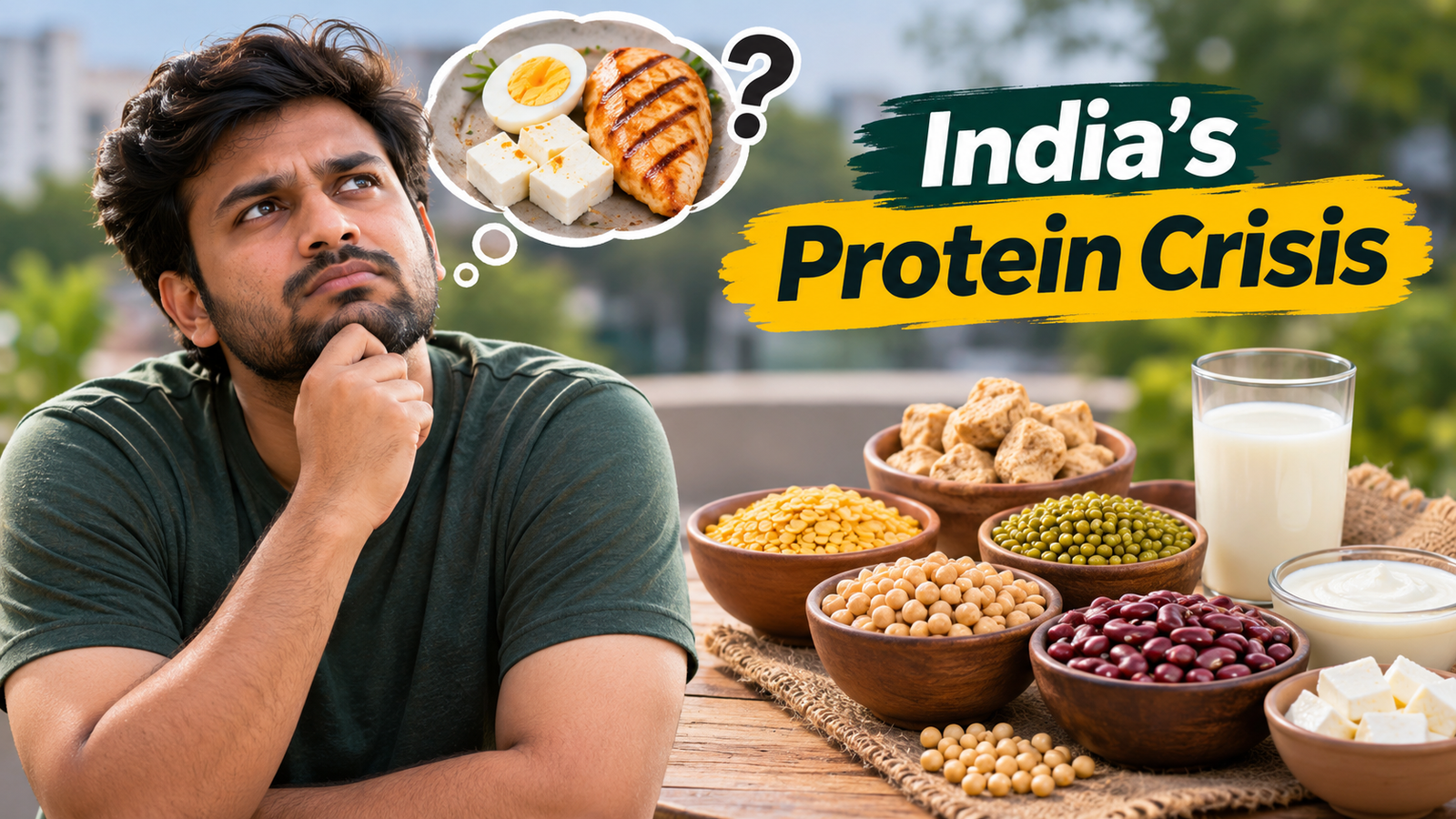
India is a country with enormous agricultural diversity, a large dairy industry, abundant pulses, cereals, soybean production and a wide variety of protein-containing foods. Yet inadequate protein intake and poor dietary protein quality remain important nutritional concerns.
An interesting question arises: If people have enough money to purchase food, why are so many Indians still not consuming adequate protein?
Protein deficiency is often associated with poverty, food insecurity and undernutrition. However, the problem is not restricted to economically disadvantaged populations. Even individuals with reasonable incomes, access to supermarkets, restaurants and a variety of food products may consume diets that are predominantly carbohydrate-based and relatively low in protein.
This raises an important distinction: having enough money to purchase food does not necessarily mean having a nutritionally balanced diet.
Many Indian households consume rice, roti, potatoes, bread, poha, biscuits and other cereal-based foods regularly. These foods provide energy, but when pulses, dairy products, soy, nuts, seeds and other protein sources are consumed in insufficient quantities, the overall diet may fail to meet protein requirements.
The problem also involves food preferences, cultural practices, nutritional awareness, affordability, convenience, food distribution, dietary habits and misconceptions about protein.
Protein is essential for muscle maintenance, tissue repair, enzyme production, immune function, hormone synthesis and numerous metabolic processes. Therefore, inadequate protein consumption can affect health beyond muscle development.
This article explores India's protein consumption problem, why it persists even among people with sufficient income, the scientific importance of protein, vegetarian dietary challenges and practical strategies to improve protein intake.
1. Is India Really Facing a Protein Crisis?
The expression "protein crisis" is frequently used in nutrition discussions, but it requires scientific clarification.
India does not necessarily have a uniform shortage of protein in terms of total national food availability or average daily protein intake. The more important concern is the quality, distribution and sources of protein consumed by different population groups.
According to the Ministry of Statistics and Programme Implementation (MoSPI), average daily protein intake in 2023-24 was approximately:
| Population | Average protein intake |
|---|---|
| Rural India | 61.8 g/day |
| Urban India | 63.4 g/day |
These are household-consumption-based per-capita estimates, not individual clinical dietary assessments.
At first glance, these figures may suggest that Indians are consuming sufficient protein. However, averages can hide considerable differences between individuals, households, age groups and socioeconomic categories.
A person weighing 50 kg and another weighing 90 kg do not necessarily have the same protein requirements.
Furthermore, total protein intake does not tell us everything about protein quality, amino acid composition, digestibility or the distribution of protein across meals.
A 2025 analysis by the Council on Energy, Environment and Water (CEEW), based on the 2023–24 Household Consumption Expenditure Survey, found that average protein consumption at home was approximately 55.6 g per person per day.
Nearly half of this protein came from cereals such as rice, wheat, suji and maida.
The report also identified substantial differences between income groups. The richest 10% consumed approximately 1.5 times more protein at home than the poorest 10%.
This suggests that India's protein challenge is not simply about the availability of protein-containing foods. It is also about what people choose, what they can access and how their diets are structured.
Therefore, the term protein crisis is best understood as a broader problem of protein quality, dietary diversity and unequal access rather than a claim that every Indian is protein deficient.
2. Why Are Indians Not Consuming Enough High-Quality Protein?
One of the most important characteristics of Indian diets is their dependence on cereals.
Rice and wheat are staple foods across large parts of the country. They provide energy and contribute some protein, but they may not provide an optimal balance of essential amino acids when they dominate the diet.
2.1 Excessive Dependence on Rice and Wheat
Rice and wheat are important sources of carbohydrates.
A typical Indian meal may contain a large portion of rice or several rotis, a small quantity of dal, a limited quantity of vegetables and occasionally curd or another protein-containing food.
Such a meal can provide adequate energy but may have a relatively low protein contribution depending on the portions.
For example, a person consuming large quantities of rice throughout the day but only a small serving of dal may consume substantially less protein than someone following a more balanced dietary pattern.
The problem is not rice or wheat themselves. The problem is excessive dependence on cereals without sufficient complementary protein sources.
2.2 Pulses Are Not Consumed in Sufficient Quantities
India has a rich variety of pulses, including:
Moong dal.
Masoor dal.
Chana dal.
Toor dal.
Urad dal.
Rajma.
Chickpeas.
Black gram.
Peas.
These foods provide plant protein, dietary fiber, complex carbohydrates, minerals and other beneficial nutrients.
Despite their nutritional importance, pulse consumption remains below recommended levels in many Indian dietary patterns.
The CEEW analysis found that pulses contributed approximately 11% of India's at-home protein intake, compared with approximately 19% in its recommended dietary comparison.
Increasing the consumption of affordable pulses and legumes could improve both protein quantity and dietary quality.
2.3 Insufficient Consumption of Milk and Dairy Products
Milk, curd and paneer are important protein sources in Indian diets.
However, their consumption varies considerably between households and regions.
Milk and dairy products provide high-quality protein containing all essential amino acids.
For individuals following vegetarian diets, dairy products can help improve protein intake.
However, some households consume milk primarily in tea, coffee or small quantities rather than as a meaningful protein source.
A cup of tea containing a small quantity of milk cannot be considered equivalent to a full serving of milk or curd.
2.4 Limited Consumption of Soybean and Soy Products
Soybean is one of the most useful plant-based protein sources.
Soy products include:
Soy chunks.
Tofu.
Soy milk.
Tempeh.
Soybean preparations.
Soy protein has a relatively favorable essential amino acid profile compared with many other plant proteins.
However, soybean-based foods are not regularly included in many traditional Indian meal patterns.
2.5 Low Consumption of Eggs, Fish and Meat in Some Populations
Eggs, fish, poultry and meat provide high-quality protein.
However, consumption varies according to dietary preferences, religion, culture, geography, household food practices and affordability.
Some people consume animal foods only occasionally, while others avoid them completely.
Vegetarian diets can provide adequate protein, but they require appropriate food combinations, sufficient quantities and dietary diversity.
3. Why Does the Protein Problem Exist Even Among People With Enough Income?
This is perhaps the most important question.
Many people assume that nutritional inadequacy is automatically a consequence of poverty.
However, income and nutritional knowledge are two different things.
A household may have sufficient money to purchase food but still follow an unbalanced dietary pattern.
Several factors explain this situation.
3.1 Lack of Nutrition Awareness
Many people understand that carbohydrates provide energy and that fat provides energy, but they may not understand how much protein their bodies require.
Some individuals believe that protein is necessary only for bodybuilders, athletes or people who exercise regularly.
This is incorrect.
Every individual requires protein for normal physiological functions, irrespective of whether they visit a gym.
Protein is necessary for maintaining tissues, producing enzymes, supporting immune function and replacing proteins that are continuously broken down in the body.
3.2 Cultural Eating Habits
Food habits develop through childhood experiences, family traditions and regional cuisines.
In many Indian households, the meal structure is traditionally cereal-dominant.
For example:
Breakfast may consist of poha, upma or bread.
Lunch may consist of rice, vegetables and a small quantity of dal.
Evening snacks may include biscuits or namkeen.
Dinner may consist of rice or roti with vegetables.
Although these meals can provide energy and several nutrients, their protein content may be inadequate if protein-rich foods are not included in sufficient quantities.
Changing such established habits requires nutrition education and practical meal planning.
3.3 Protein Is Often Not Prioritized During Grocery Shopping
When people purchase groceries, they may prioritize rice, wheat, oil, vegetables, spices, snacks and other household essentials.
Protein-rich foods may not receive the same attention.
For example, a household may purchase several kilograms of rice and wheat every month but only a small quantity of pulses, soy products or dairy foods.
This reflects dietary priorities rather than simply financial limitations.
3.4 Perception That Protein-Rich Foods Are Expensive
Many people associate protein with expensive products such as whey protein, imported supplements, almonds, chicken breast and specialised health foods.
This creates the misconception that adequate protein consumption requires a large food budget.
However, several affordable Indian foods provide meaningful amounts of protein.
Examples include:
Roasted chana.
Soya chunks.
Whole chickpeas.
Rajma.
Moong.
Masoor dal.
Milk.
Curd.
Eggs.
Protein supplements are not compulsory for everyone.
A well-planned diet can meet protein requirements using ordinary foods.
3.5 Convenience and Time Constraints
Modern working schedules influence food choices.
People working in offices, factories, shops and other occupations may prefer foods that are quick to prepare.
Preparing pulses, soaking legumes, cooking soybeans and planning balanced meals require time and organisation.
As a result, people may rely on bread, biscuits, instant noodles, packaged snacks and other convenient foods.
This is particularly relevant among people living away from their families or in rented accommodation.
3.6 Misconceptions About Vegetarian Diets
Some people believe that vegetarian diets cannot provide sufficient protein.
This is not scientifically correct.
A properly planned vegetarian diet can meet protein requirements.
However, the quality and quantity of protein sources must be considered.
Combining cereals with pulses, consuming dairy products and including soybean, tofu, chickpeas and other legumes can improve dietary protein intake.
3.7 Gender Differences in Food Distribution
In some households, food distribution may not be equal among family members.
Women may prioritise feeding children and other family members before themselves.
Pregnant and lactating women also have increased nutritional requirements.
If women regularly consume smaller portions or fewer protein-rich foods, they may be at greater risk of inadequate nutrient intake.
This is not only an economic problem. It is also connected with household food practices and social factors.
4. Understanding Protein Quality: Why Quantity Alone Is Not Enough
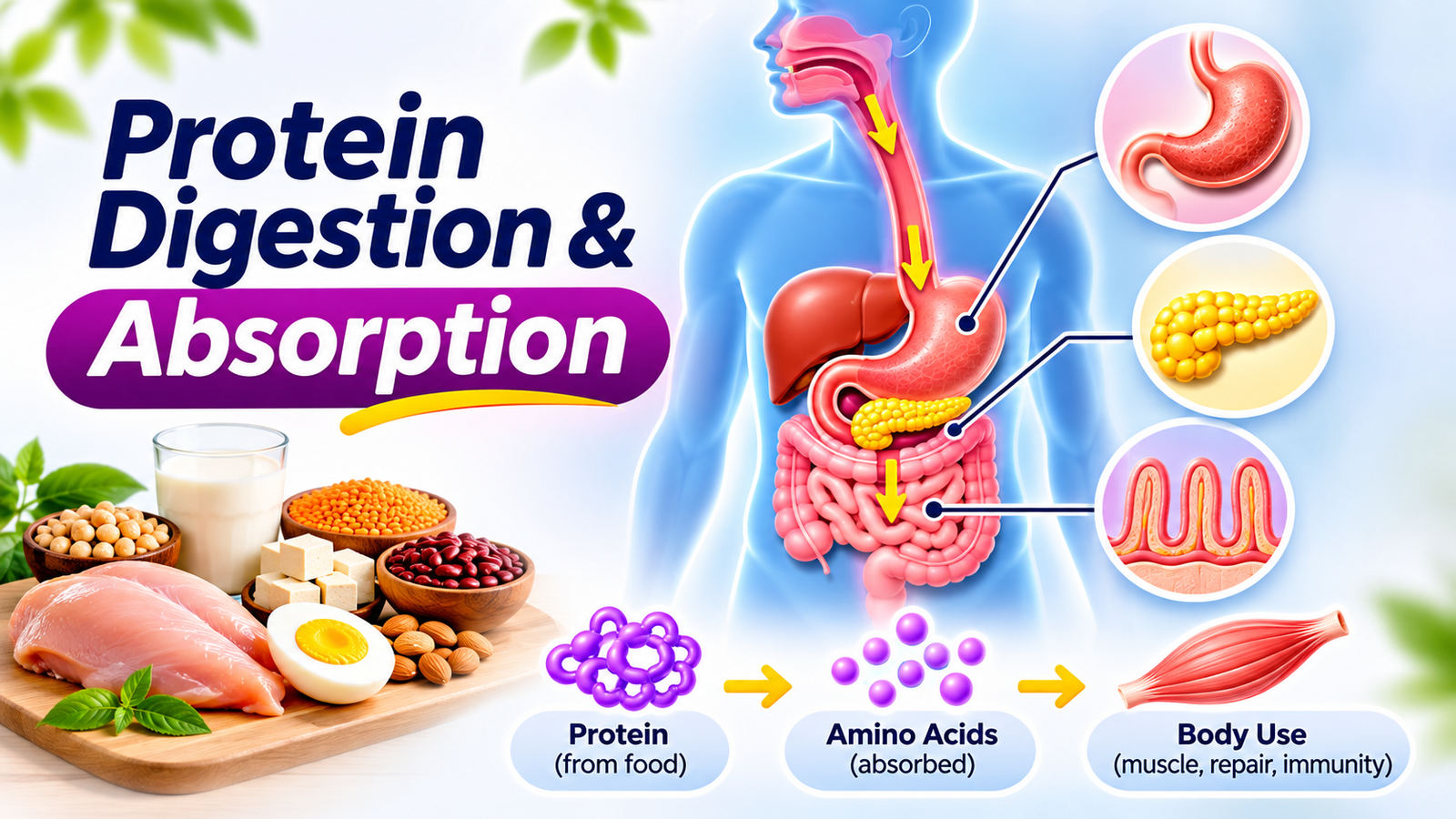
Protein is made up of amino acids.
These amino acids are required for the synthesis of body proteins and numerous biologically active substances.
There are 20 standard amino acids used in human protein synthesis.
Nine are considered essential amino acids because the body cannot synthesise them in sufficient quantities and they must be obtained from food.
They are:
Histidine.
Isoleucine.
Leucine.
Lysine.
Methionine.
Phenylalanine.
Threonine.
Tryptophan.
Valine.
4.1 Essential Amino Acids in Different Foods
Different protein sources have different amino acid profiles.
For example:
Cereals are generally relatively low in lysine.
Pulses are generally relatively low in sulphur-containing amino acids such as methionine.
Dairy and eggs provide all essential amino acids in favourable proportions.
Soy protein provides a relatively complete essential amino acid profile.
This is why dietary diversity is important.
4.2 Complementary Protein
Combining different plant protein sources can improve the overall amino acid profile.
A traditional Indian combination is cereal plus pulses.
Examples include:
Rice and dal.
Roti and chana.
Khichdi.
Idli and sambar.
Dosa and sambar.
Cereals generally provide relatively more sulphur-containing amino acids, whereas pulses provide relatively more lysine.
Combining them improves the balance of essential amino acids.
According to the ICMR-NIN Dietary Guidelines for Indians (2024), an appropriate combination of cereals and pulses in a ratio of approximately 3:1 by raw food weight can help meet essential amino acid requirements.
The addition of 250 ml of milk can further improve essential amino acid intake.
Complementary proteins do not have to be consumed in the same mouthful or necessarily at the same meal. Overall dietary variety across the day is important.
4.3 Protein Digestibility
Not all dietary proteins are digested and absorbed equally.
Protein quality is influenced by:
Essential amino acid composition.
Digestibility.
Food processing.
Preparation methods.
Overall dietary composition.
Animal proteins generally have high digestibility and favourable essential amino acid profiles.
However, many plant proteins can also provide excellent nutritional value when consumed in sufficient quantities and appropriate combinations.
5. How Much Protein Does an Indian Adult Need?
Protein requirements depend on body weight, age, physiological condition, health status and physical activity.
According to the ICMR-NIN Dietary Guidelines for Indians (2024):
Estimated Average Requirement (EAR): 0.66 g/kg body weight/day.
Recommended Dietary Allowance (RDA): 0.83 g/kg body weight/day.
For a healthy adult weighing 65 kg:
65 × 0.83 = 53.95 g protein/day.
Therefore, the recommended intake is approximately 54 g per day.
5.1 Examples of Daily Protein Requirements
| Body weight | Protein at 0.83 g/kg |
|---|---|
| 45 kg | 37.4 g |
| 50 kg | 41.5 g |
| 55 kg | 45.7 g |
| 60 kg | 49.8 g |
| 65 kg | 54.0 g |
| 70 kg | 58.1 g |
| 75 kg | 62.3 g |
| 80 kg | 66.4 g |
| 90 kg | 74.7 g |
These values illustrate the basic adult RDA calculation. Requirements may differ in pregnancy, lactation, childhood, older age, illness and specific clinical situations.
People with kidney disease or other medical conditions may require individualised protein advice.
6. Affordable Protein Sources Available in India
One of the biggest misconceptions is that protein-rich foods are always expensive.
India has several accessible plant and animal protein sources.
The following values are approximate and vary according to food variety, processing and preparation. Dry and cooked weights must not be confused.
| Food | Approximate protein per 100 g |
|---|---|
| Dry soya chunks | 50-52 g |
| Dry soybeans | 36-40 g |
| Roasted chana | 18-22 g |
| Peanuts | 25-26 g |
| Dry chickpeas | 19-21 g |
| Dry rajma | 20-24 g |
| Dry lentils | 23-25 g |
| Dry moong | 23-24 g |
| Paneer | 15-20 g |
| Eggs | 12-13 g |
| Milk | 3.2-3.5 g |
| Curd | 3-4 g |
| Cooked chickpeas | 8-9 g |
| Cooked rajma | 8-9 g |
| Cooked lentils | 8-9 g |
6.1 Soya Chunks
Soya chunks are among the most concentrated and economical plant protein sources.
Approximately 50 g of dry soya chunks can provide around 25 g of protein, depending on the brand.
They can be included in:
Soya curry.
Vegetable pulao.
Soya bhurji.
Soya cutlets.
Soya-based mixed vegetable preparations.
6.2 Roasted Chana
Roasted chana is a convenient snack that provides protein, fibre and minerals.
It can be included between meals instead of frequently consuming biscuits and other low-protein snacks.
However, portion size matters because roasted chana also provides energy.
6.3 Chickpeas and Rajma
Chickpeas and rajma are excellent components of Indian diets.
They can be used in:
Chana curry.
Chole.
Rajma rice.
Chickpea salad.
Sprouts and legume preparations.
Proper soaking and thorough cooking improve palatability and digestibility.
6.4 Milk and Curd
Milk and curd provide high-quality protein.
A 250 ml glass of milk generally provides approximately 8 g of protein.
Curd provides approximately 3-4 g protein per 100 g, depending on its preparation.
These foods are useful for individuals who consume dairy products.
6.5 Eggs
Eggs are a convenient and high-quality protein source.
One medium-to-large egg generally provides approximately 6-7 g of protein.
They can be included in breakfast, lunch or dinner for individuals who consume eggs.
6.6 Peanuts and Nuts
Peanuts provide protein and unsaturated fats.
However, nuts should not be considered the primary protein source in a weight-management diet because they are energy-dense.
They are better used as complementary foods in appropriate portions.
7. How Can Indians Improve Their Daily Protein Intake?
Improving protein intake does not necessarily require expensive products or complicated meal plans.
The first step is to identify which meals are dominated by cereals and then add appropriate protein sources.
7.1 Improve Breakfast
Common Indian breakfasts include poha, upma, bread, idli and dosa.
These foods can be improved by adding protein sources.
Examples:
Poha with peanuts and curd.
Idli with a generous serving of sambar.
Vegetable upma with curd.
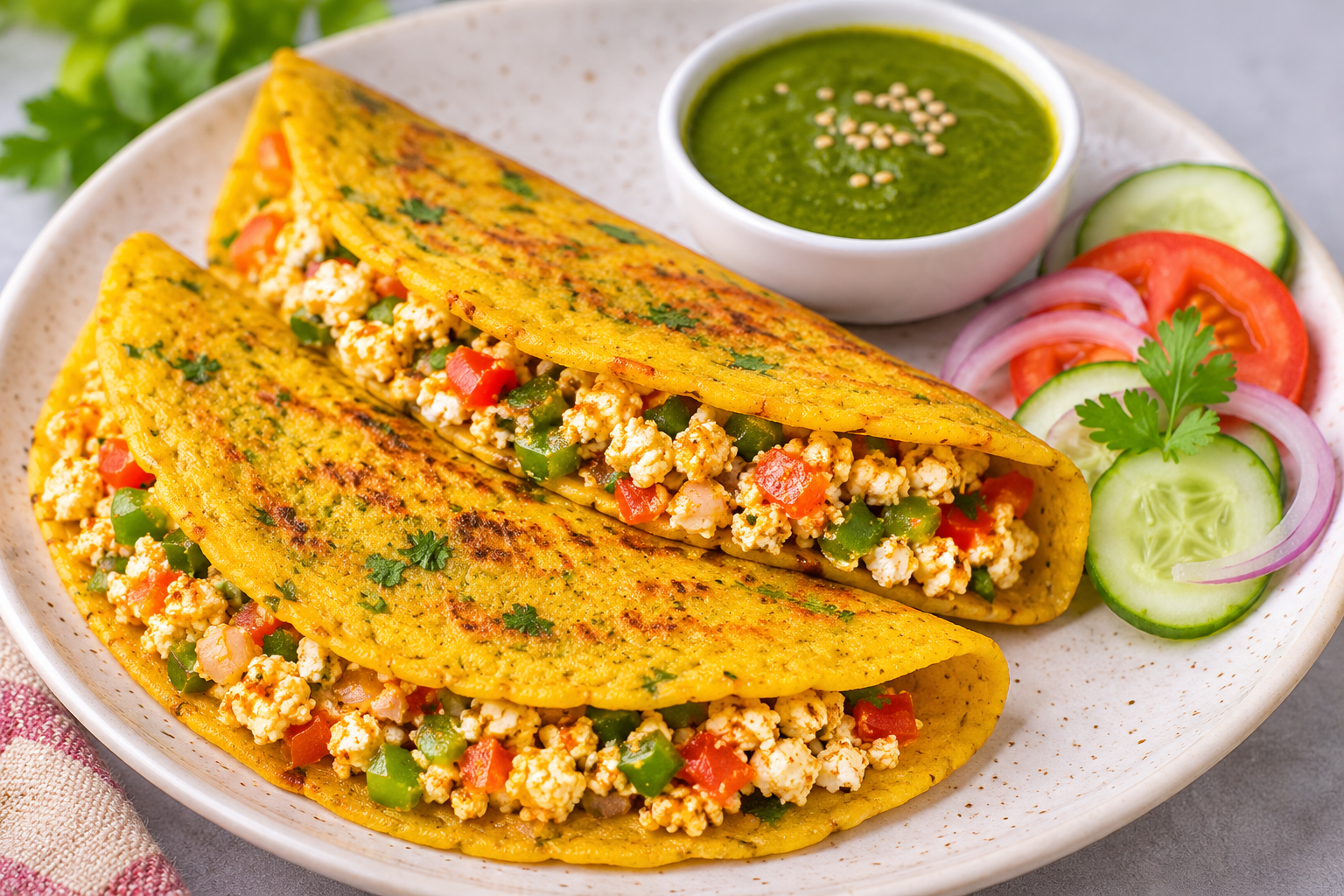
Besan chilla.
Moong dal chilla.
Paneer sandwich.
Eggs with whole-grain toast.
7.2 Improve Lunch
A balanced Indian lunch can include:
Rice or roti.
Dal.
Vegetables.
Curd.
Salad.
Additional protein such as chickpeas, paneer, tofu, eggs or fish where appropriate.
The quantity of dal should be sufficient rather than merely used as a small side dish.
7.3 Choose Better Evening Snacks
Many people consume biscuits, chips, namkeen and bakery products during evening tea.
These foods can be replaced or supplemented with:
Roasted chana.
Sprouts.
Boiled chickpeas.
Unsweetened curd.
Milk.
Peanut preparations.
Suitable homemade legume snacks.
7.4 Improve Dinner
Dinner should also contain a meaningful protein source.
Examples include:
Roti with dal and vegetables.
Rice with rajma.
Vegetable khichdi with curd.
Tofu curry with roti.
Paneer with vegetables.
Egg curry with rice.
Fish curry with rice.
The goal is to include protein throughout the day rather than consuming nearly all of it in one meal.
8. Example of a Protein-Conscious Indian Vegetarian Diet
The following is an illustrative meal pattern, not an individualised prescription.
| Meal | Food example |
|---|---|
| Breakfast | Moong dal chilla with curd |
| Mid-morning | Seasonal fruit |
| Lunch | Rice, dal, vegetables, curd and salad |
| Evening | Roasted chana or sprouts |
| Dinner | Roti with soya chunks or paneer curry and vegetables |
| Optional | Milk, depending on individual requirements |
Actual protein intake will depend on portion sizes and recipes.
A dietitian should calculate the nutritional contribution of the complete diet rather than assuming that a meal is high in protein simply because it contains one protein-rich ingredient.
9. Does Everyone Need Protein Supplements?
No.
Protein supplements are not compulsory for everyone.
Many healthy adults can meet their protein requirements through ordinary foods.
However, supplements may be useful in selected situations, such as:
Individuals with high protein requirements.
Athletes with difficulty meeting requirements through food.
People with poor appetite.
Certain clinical nutrition situations.
Individuals with practical difficulties consuming sufficient protein.
Whey protein is a convenient source of dairy protein, but it is not inherently superior to every whole-food protein source for general health.
Before using supplements, individuals should consider their dietary intake, medical conditions, product quality and actual nutritional requirements.
People with kidney disease or other relevant medical conditions should seek professional advice before significantly increasing protein intake.
10. Consequences of Inadequate Protein Intake
Protein is required for maintaining the structure and function of the body.
Inadequate intake over time, especially when combined with insufficient total energy intake or illness, can contribute to several health problems.
10.1 Loss of Muscle Mass
The body continuously synthesises and breaks down muscle proteins.
If protein intake is inadequate over time, particularly in the presence of illness or insufficient energy intake, muscle maintenance may become difficult.
This can contribute to reduced strength and physical function.
10.2 Poor Recovery and Tissue Repair
Protein supplies amino acids required for tissue repair.
Inadequate intake may compromise recovery in individuals with injuries, wounds or certain illnesses.
10.3 Impaired Immune Function
Antibodies and many other immune-related proteins require amino acids.
Severe protein-energy malnutrition can impair immune function and increase susceptibility to infections.
10.4 Growth and Development Problems
Children require sufficient protein and energy for normal growth.
Long-term inadequate nutrition may contribute to impaired growth and development.
However, childhood growth failure is multifactorial and cannot be attributed to protein deficiency alone.
10.5 Poor Nutritional Status in Older Adults
Older adults may experience reduced appetite, dental problems, illness and difficulty preparing meals.
Inadequate protein intake combined with inactivity can contribute to muscle loss and sarcopenia.
Adequate protein, resistance exercise and appropriate clinical care are important for maintaining muscle function during ageing.
11. Is India's Protein Problem Only About Poverty?
No.
Poverty and food insecurity remain important contributors to nutritional inadequacy, but the protein problem is also associated with food choices, dietary habits and nutritional awareness.
A higher-income household may consume more total protein but still obtain a large proportion from cereals.
A lower-income household may rely heavily on inexpensive cereal-based meals because pulses, dairy, eggs and other protein-rich foods compete with other household expenses.
The CEEW 2025 analysis illustrates this inequality.
The bottom 10% expenditure group obtained approximately 60% of its protein from cereals, compared with approximately 38% among the top 10%.
This demonstrates that dietary quality changes with economic circumstances.
However, income alone does not guarantee a balanced diet. Nutrition education and food preferences remain important even when purchasing power is adequate.
India therefore needs a dual approach: improving access to affordable protein-rich foods while also improving awareness about dietary balance and protein quality.
12. What Should India Do to Improve Protein Nutrition?
Addressing protein inadequacy requires action at individual, household, community and public health levels.
12.1 Strengthen Nutrition Education
People should understand:
Why protein is essential.
How much protein they may require.
Which foods provide protein.
The difference between dry and cooked food protein values.
How to combine cereals and pulses.
Why protein supplements are not compulsory.
12.2 Improve School Nutrition
Schools can introduce nutrition education and promote balanced meals containing pulses, dairy products, eggs where culturally appropriate and other protein-rich foods.
12.3 Promote Affordable Protein Sources
Public nutrition programmes should encourage the availability and consumption of pulses, soy products, milk and other locally appropriate protein sources.
12.4 Improve Women's Nutrition
Women should have equitable access to nutritious food.
Pregnancy and lactation require special nutritional attention, and food distribution within households should reflect individual requirements.
12.5 Encourage Dietary Diversity
India has a rich variety of regional foods that can support protein nutrition.
Examples include dal, sattu, chickpeas, sprouts, soybean, curd, paneer, eggs and fish.
Promoting local foods may be more sustainable and affordable than depending entirely on commercial supplements.
13. Conclusion: India's Protein Challenge Is About More Than Food Availability
India's protein challenge is not simply a shortage of protein-containing foods. It is also a problem of dietary quality, distribution, food preferences, nutrition awareness and unequal access.
Official household consumption data show that average protein intake has increased. However, cereals continue to contribute a large proportion of dietary protein, while the contribution of pulses and other protein-rich foods remains lower than recommended in important dietary comparisons.
Even people with sufficient income may consume inadequate amounts of high-quality protein because of cereal-dominant eating patterns, poor nutritional awareness, convenience, cultural habits and misconceptions about protein-rich foods.
The solution does not require every Indian to purchase expensive protein supplements.
It requires better food choices, greater dietary diversity and practical nutrition education.
Traditional Indian foods such as dal, chana, rajma, soya chunks, milk, curd, paneer, eggs and fish can all contribute to better protein intake.
As nutrition professionals, we should move beyond simply telling people to eat more protein. We should explain how much they need, which foods can provide it, how to combine different sources and how to build a balanced diet within their budget.
The real challenge is not merely getting enough food. It is getting the right nutritional value from the food we eat.
14. Frequently Asked Questions (FAQs)
14.1 Is India really facing a protein crisis?
India's average protein intake has increased, but dietary quality and unequal access remain concerns. A substantial proportion of protein still comes from cereals, while pulses and other higher-quality protein sources contribute less than recommended in dietary comparisons.
14.2 How much protein does an Indian adult need daily?
According to ICMR-NIN 2024, the RDA for healthy adults is approximately 0.83 g per kg body weight per day. An adult weighing 65 kg therefore requires approximately 54 g daily.
14.3 Can vegetarians get enough protein in India?
Yes. Vegetarian diets can meet protein requirements through pulses, chickpeas, rajma, soy products, milk, curd, paneer, nuts and seeds when appropriately planned.
14.4 Is dal sufficient to meet daily protein requirements?
Dal contributes protein, but the amount depends on the type, quantity and preparation. Most individuals need a variety of protein sources throughout the day rather than depending on one food.
14.5 Which is the cheapest protein source in India?
The cost varies by region and market. Soya chunks, roasted chana, whole pulses and locally available legumes can be economical protein sources.
14.6 Are rice and roti poor protein sources?
Rice and wheat contain protein, but their essential amino acid profiles are limited, particularly in lysine. Combining cereals with pulses improves the overall amino acid balance.
14.7 Do people who do not exercise need protein?
Yes. Protein is essential for all individuals because it supports tissue maintenance, immune function, enzymes, hormones and other physiological processes.
14.8 Is whey protein necessary?
No. Whey protein is a convenient supplement, but most healthy adults can obtain adequate protein through a properly planned diet.
14.9 Can excessive protein damage the kidneys?
High protein intake may require special consideration in individuals with chronic kidney disease. Healthy individuals should follow appropriate dietary recommendations rather than consuming excessive amounts without a specific reason.
14.10 Are eggs better than plant protein?
Eggs provide high-quality, highly digestible protein. However, appropriately planned plant-based diets can also meet protein requirements. The overall diet, essential amino acid intake and individual preferences matter.
References
Ministry of Statistics and Programme Implementation, Government of India. Household Consumption Expenditure Survey 2023-24: Nutritional Intake in India. Published July 2025. Read the official report.
Council on Energy, Environment and Water (CEEW). Understanding Trends in Dietary Diversity in India: Moving Towards Climate-Friendly Eating and Sustainable Nutrition Consumption for Food System Security. 2025. Read the research report.
CEEW. Indians Are Getting Protein, But of Poor Quality-Nearly 50% Comes from Cereals. 10 December 2025. Read the findings.
Indian Council of Medical Research–National Institute of Nutrition. Dietary Guidelines for Indians. 2024. Read the official guidelines.
World Health Organization. Healthy Diet. WHO nutrition guidance.
FAO. Dietary Protein Quality Evaluation in Human Nutrition: Report of an FAO Expert Consultation. FAO Food and Nutrition Paper 92. 2013. Read the report.
Medical Disclaimer
This article is intended for nutrition education and public health awareness. It does not replace individual dietary assessment, medical diagnosis or treatment. Protein requirements vary according to age, body weight, physiological condition and medical history. Individuals with kidney disease or other relevant medical conditions should seek personalised advice from qualified healthcare professionals.







💬 Comments (0)
Be respectful. Website links and phone numbers are not allowed.